Community guide

Marriage in Islam & Muslim Weddings in Japan

Everything you need to know — from the Islamic pillars of nikah and mahr, to Japanese civil registration, which mosques conduct ceremonies, and real stories from couples who married in Japan.

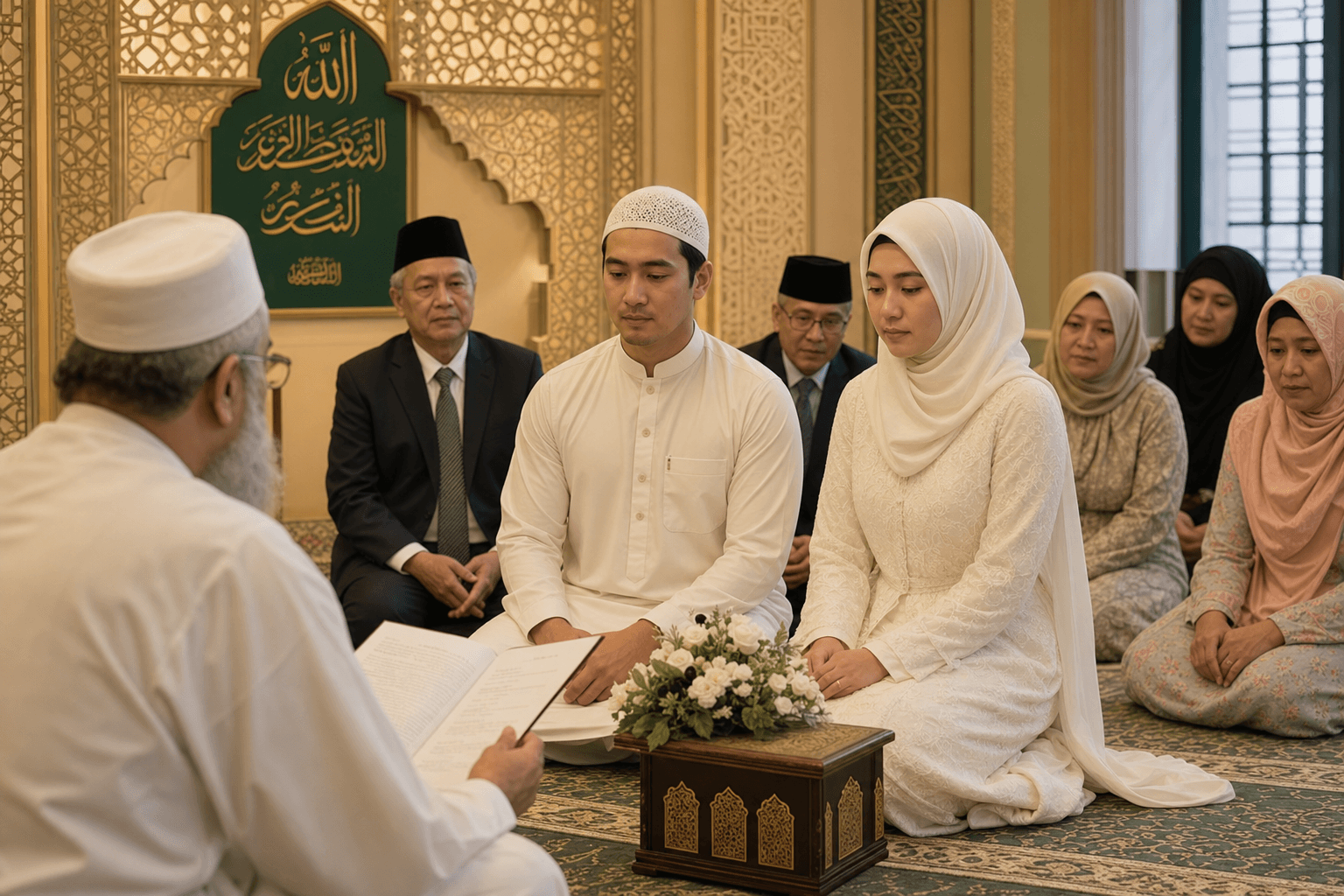
A Muslim nikah ceremony inside a mosque in Japan — couple with imam and family

A nikah ceremony at a mosque in Japan — the imam reads the contract as family witnesses

What is Nikah?

“And of His signs is that He created for you from yourselves mates that you may find tranquillity in them; and He placed between you affection and mercy.”
— Quran 30:21

In Islam, marriage (nikah) is not merely a social or legal contract — it is an act of worship. The Prophet Muhammad ﷺ said: “Nikah is my sunnah, and whoever does not follow my sunnah is not from me.”(Ibn Majah). Marriage is described as completing half of one’s deen.

Unlike a civil marriage, which is recognised by the state, a nikah is recognised before Allah. It establishes the rights and responsibilities between husband and wife according to Islamic law — including the mahr, the obligation of nafaqah (financial maintenance by the husband), and the framework for a halal, loving household.

In Japan, the nikah has no legal standing on its own. Muslim couples must also register their marriage through the Japanese civil system. This guide explains both processes — and how couples across Japan have navigated them beautifully.

The Pillars of Nikah

The six essential elements that make a nikah valid according to Islamic jurisprudence

01الولي

Wali — the guardian

The bride's wali (guardian — typically her father or close male Muslim relative) must be present and give his consent. In Japanese law this role has no legal parallel, but in Islamic jurisprudence it is a pillar of a valid nikah. If no male Muslim relative is available, the imam of the local mosque may act as wali by delegation.

02المهر

Mahr — the gift

The groom must offer a mahr — a gift of money, gold, property, or any agreed item of value — exclusively to the bride. It becomes her permanent property. In Japan, couples commonly use a sum of money, a piece of gold jewellery, or a symbolic item of cultural significance. The amount is agreed between the couple (and wali) before the ceremony.

03الشهود

Two Muslim witnesses

Two adult Muslim men of sound mind must be present and consciously witness the nikah contract. Members of the local mosque community typically fulfil this role. Some scholars also accept one man and two women. Witnesses should not be the wali himself.

04الإيجاب والقبول

Ijab and Qabul — offer and acceptance

The heart of the nikah. The wali (or bride herself in some madhabs) makes the offer (ijab): "I give my daughter in marriage to you for the agreed mahr." The groom accepts (qabul): "I accept this marriage." This exchange must be clear, verbal, and witnessed. In Japan it may be conducted in Arabic, English, Japanese, or any language understood by all present.

05الخطبة

Khutbah — the sermon

The imam typically opens the ceremony with a brief khutbah (sermon) reciting Quranic verses about marriage, the rights and responsibilities of spouses, and du'a (supplication) for the couple. This is strongly recommended (sunnah) but not a pillar of the nikah itself.

06الوليمة

Walima — the wedding feast

After the nikah it is strongly recommended (some scholars say obligatory upon the groom) to hold a walima — a public celebration and feast to announce the marriage. In Japan, Muslim couples typically hold this at a halal-catered restaurant, a hotel function room, or at the mosque community hall. Even a modest gathering with family and friends fulfils the sunnah.

Japanese Wedding Traditions

Understanding Japanese marriage customs — and where they align with or differ from Islamic practice

Shinto ceremony

The traditional Japanese wedding is a Shinto ceremony conducted at a shrine by a Shinto priest. The couple drinks sake together (san-san-kudo) and exchange symbolic items. For Muslims, participation in Shinto religious rites is not permissible, but attending as a guest without religious participation is a matter of personal/family discretion.

Western-style church weddings

Extremely popular in Japan despite low Christian population — mostly performed at hotel chapels by non-ordained officiants. Considered cultural rather than religious by most Japanese families. Many Muslims find the visual aesthetic acceptable without the religious element.

Nakodo — the go-between

Traditional Japanese matchmaking involved a nakodo (仲人) — a respected couple who introduced the parties, facilitated negotiations, and acted as guarantors. This role has clear parallels to the wali and family-mediated introduction process in Islamic marriage culture.

Civil registration only

Many modern Japanese couples skip ceremony entirely and simply submit the Kon-in Todoke at the city hall — a 15-minute administrative process. For Muslims, this is the legal step required by Japanese law, but the Islamic nikah is still a separate essential religious obligation.

White shiromuku kimono

The white bridal kimono (shiromuku) carries a meaning similar to Islamic modest dress — symbolising purity and the readiness to be 'dyed' by the husband's family. Many Muslim brides in Japan wear a white hijab and modest dress that beautifully harmonises with this Japanese symbolism.

Legal Marriage Registration in Japan

A step-by-step overview of the civil registration process for couples in Japan

STEP 1

Prepare documents

Both parties need: passport, residence card (zairyu card), certificate of eligibility to marry from your home country's embassy (or a notarised sworn declaration), and for some nationalities a translated copy of family register. Requirements vary by nationality — confirm with your local city hall (役所) in advance.

STEP 2

Register at your city hall

Submit the Kon-in Todoke (婚姻届 — marriage notification form) at the city hall (shiyakusho or kuyakusho) of either partner's registered address in Japan. Two Japanese witnesses or permanent residents must sign the form. Registration is free. Once accepted, the marriage is legally recognised in Japan.

STEP 3

Notify your home country

After Japanese registration, inform your home country's embassy or consulate in Japan. Many countries (Malaysia, Indonesia, Pakistan, etc.) require their nationals to register the marriage locally within a set period. Your embassy will issue a marriage certificate recognised in your home country.

STEP 4

Conduct the Islamic nikah

The nikah is a separate religious ceremony — it is not part of Japanese civil law. Most Muslim couples in Japan register legally first, then hold the nikah at the mosque with an imam. Some hold both on the same day. Either order is acceptable Islamically, though completing the nikah before or alongside legal registration is most common.

Important:Legal requirements vary significantly by nationality. Always confirm exact document requirements directly with your local city hall (役所) and your home country’s embassy before beginning the process.

Where to Hold Your Nikah

Mosques across Japan that assist with nikah ceremonies — contact in advance to arrange an imam and date

Tokyo

Tokyo Camii

Japan's largest and most prestigious mosque. Regularly conducts nikah ceremonies. Contact the administration office in advance to arrange an imam and date.

+81-3-5790-0760

Osaka

Osaka Ibaraki Mosque

Well-established Kansai mosque with active community support for nikah ceremonies. Serves the large Muslim population in Osaka and surrounding areas.

+81-72-645-8617

Kobe

Kobe Muslim Mosque

Japan's oldest mosque (est. 1935) and one of the most symbolically meaningful venues for a nikah in Japan. Contact the mosque administration.

+81-78-231-6060

Kyoto

Kyoto Islamic Cultural Centre

Serves Kyoto's growing Muslim community including international students. Can arrange nikah ceremonies with advance notice.

+81-75-712-7741

See our full Mosque Directory Japan for more locations.

The celebration

The Walima — Your Wedding Feast

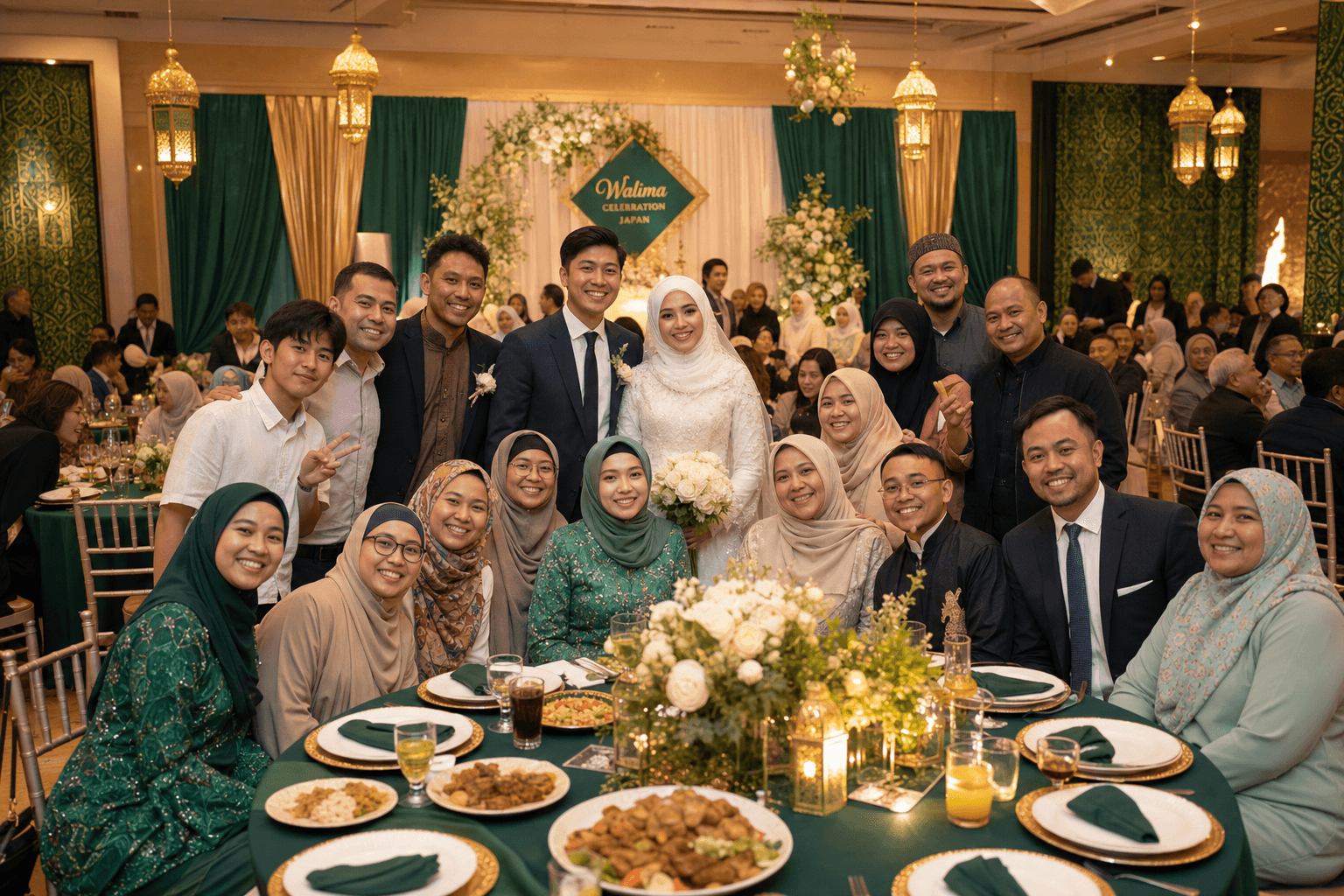
The walima is the celebratory feast held after a nikah — the Prophet ﷺ commanded it and encouraged even a modest gathering. In Japan, Muslim couples have held walimas in many creative ways:

  • Halal-catered private rooms at Japanese restaurants (many Tokyo, Osaka, and Kobe restaurants offer private rooms that work beautifully for intimate walimas of 10–30 guests)
  • Hotel function rooms — most major hotel chains in Japan can accommodate halal catering requests with advance notice
  • Mosque community halls — many mosques have spaces that the community can use for walimas, often at low or no cost for community members
  • Home gatherings — a sunnah-style walima with family and close friends at a private residence
A joyful Muslim walima wedding reception in Japan — diverse Muslim community celebrating together

From Couples Who Married in Japan

Real experiences from Muslims who navigated both the nikah and Japanese civil marriage

We held our nikah at Tokyo Camii on a Friday afternoon, then had a small walima at a halal restaurant in Asakusa the following weekend. The imam was wonderful — he gave the khutbah in Arabic and Japanese.

Fatimah & Haruto

Indonesian–Japanese couple, Tokyo

Registering at Shibuya city hall took 20 minutes. Getting our home countries to recognise the marriage took six months. Do the embassy paperwork early — it's the part nobody tells you about.

Aisha & Khalid

Malaysian–Pakistani couple, Osaka

My Japanese family had never attended a nikah before. When the imam explained each step in Japanese, you could see them genuinely moved. It was the most beautiful moment — two cultures completely in harmony.

Maryam & Kenji

Egyptian–Japanese couple, Kyoto

Frequently Asked Questions

Is a nikah legally recognised in Japan?
No. A nikah is a religious ceremony and is not legally recognised under Japanese civil law. To be legally married in Japan, couples must submit the Kon-in Todoke (marriage notification form) at their local city hall. Most Muslim couples do both: register legally at city hall AND conduct the nikah ceremony at a mosque.
Which mosques in Japan can conduct nikah ceremonies?
Tokyo Camii (Shibuya), Osaka Ibaraki Mosque, Kobe Muslim Mosque, and Kyoto Islamic Cultural Centre all regularly assist with nikah ceremonies. Contact the mosque administration in advance to arrange an imam and confirm requirements.
What documents are needed to get married in Japan as a foreigner?
You typically need: passport, residence card (zairyu card), and a certificate of eligibility to marry (or sworn declaration) from your home country's embassy. Requirements vary by nationality. Confirm exact requirements with your local city hall before visiting.
Can a Muslim bride marry without a wali in Japan?
Under the Shafi'i and Hanbali madhabs, a wali (guardian) is required for a valid nikah. Under the Hanafi madhab, an adult bride may contract her own marriage. If no male Muslim relative is available in Japan, the local mosque imam may act as wali by delegation. Discuss your situation with the imam who will conduct your nikah.

Ready to begin your journey?

Al-Nikah Japan connects sincere Muslims across Japan — free to join, privacy-first, and built on Islamic values.

Share your marriage story

Did you get married in Japan as a Muslim couple? Your experience — the nikah, the city hall registration, the walima, the challenges, the beautiful moments — can inspire and guide others walking the same path. Share it here and we’ll feature it on this page.

Share Our Story →

We’ll publish with your permission only. Names can be kept private.